
What do you think when someone says, “Cuffing season is here?” One thing is for sure: why does everyone suddenly want a relationship when the weather gets cold? You’ve probably heard your friends joke about finding someone before winter or seen them on social media posts saying, “Cuffing season is here!” But what does this popular phrase really mean?
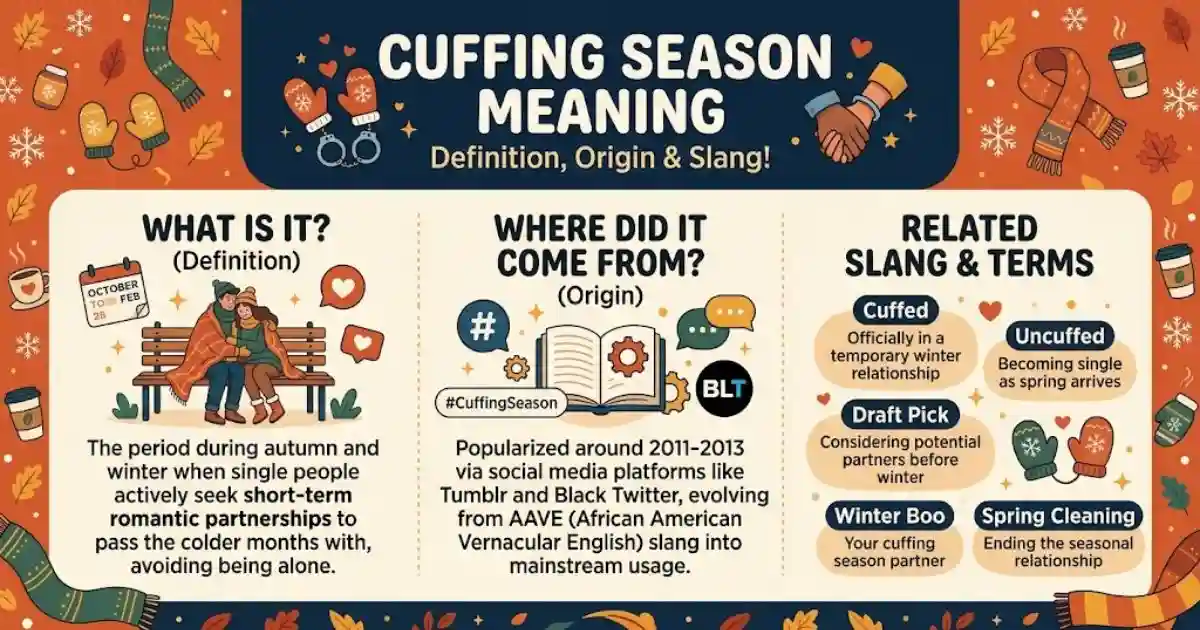
Cuffing season is modern dating slang for the time of year, usually fall and winter, when people are most interested in finding a romantic partner for companionship, affection, love, and emotional connection. The relationship doesn’t have to be temporary; sometimes, a seasonal romance can turn into something serious.
You often see cuffing season mentioned on dating apps, TikTok videos, Instagram posts, memes, group chats, and relationship conversations. As cold weather encourages more time indoors and holiday gatherings bring romance into focus, the phrase has become a familiar part of online dating culture.
But is cuffing season actually a real dating trend, or is it just an internet joke? Why do some people suddenly want a partner when the temperature drops? And does a cuffing-season relationship have to end when winter ends?
In this guide, you’ll find out what cuffing season means, where the term comes from, how people use it, its dating and social media relevance, common examples, cultural interpretations, and how to respond when someone mentions it.
Read Also : Salty Meaning, What It Means in Slang and Social Media!
Meaning & Definition
Cuffing season is the time of year, usually the fall and winter months, when some people become more interested in finding a romantic partner or entering a committed relationship. The term suggests that people want to be “cuffed,” or romantically attached, during the colder months when staying indoors, celebrating holidays, and seeking companionship can feel especially appealing.
In simple terms, cuffing season means the period when people are more likely to look for a partner to spend the colder months with.
For example:
“Summer is over, and everyone on my feed is suddenly looking for a relationship. Cuffing season is definitely here.”
The phrase is usually playful and informal, especially in dating conversations, memes, TikTok posts, and social media captions. It does not necessarily mean that someone wants a serious lifelong relationship. Sometimes, it simply describes a desire for companionship, affection, emotional closeness, or a seasonal relationship.
Old and New Slang Meaning with Comparison
| Aspect | Older/Traditional Meaning | Modern Slang Meaning |
| Cuffing | Being restrained or physically “handcuffed” | Becoming romantically attached |
| Cuffing season | Not a traditional dating expression | Fall/winter period when people seek relationships |
| Main idea | Physical restraint | Romantic commitment or companionship |
| Typical context | Literal or law-enforcement-related | Dating, relationships, memes, TikTok, social media |
| Tone | Serious or literal | Casual, humorous, playful |
| Example | “The suspect was cuffed.” | “It’s cuffing season, time to find someone.” |
The modern slang meaning is much more common when you see “cuffing season” in a dating or social media context.
Pronunciation of “Cuffing Season”
Cuffing season is pronounced:
KUHF-ing SEE-zuhn
- Cuffing: /ˈkʌfɪŋ/
- Season: /ˈsiːzən/
You can think of it as:
“CUFF-ing SEE-zun.”
The pronunciation is straightforward, but the meaning can change depending on context. If someone says “cuffed” while discussing police or physical restraint, they may be using the literal meaning rather than the dating slang.
Breakdown
The phrase contains two simple words:
Cuffing + Season
“Cuffing” comes from “cuff,” which literally refers to restraining someone with handcuffs. In modern dating slang, cuffing is used metaphorically to describe becoming attached to another person romantically.
“Season” refers to a particular period of the year.
Put together, cuffing season describes a period when people are perceived as being more interested in dating, relationships, companionship, intimacy, and romantic connection.
The phrase is usually associated with:
- Fall
- Winter
- Cold weather
- Holiday gatherings
- Cozy nights indoors
- Dating apps
- Romantic relationships
- Emotional companionship
- Increased desire for connection
However, there is no official start or end date. Some people jokingly declare that cuffing season begins in September or October and lasts through February or even early spring.
Other Meanings and Descriptions
Although the dating meaning is dominant, cuffing season can describe different relationship situations.
1. Looking for a relationship
Someone may actively start dating because they want a partner during the colder months.
Example:
“I’m finally ready to date again. Cuffing season got me.”
2. Wanting companionship
You may not be searching for marriage or a serious commitment. You may simply want someone to spend time with.
3. Seasonal relationship
Some people use the term jokingly for a relationship that begins during fall or winter and may end when warmer weather arrives.
4. Increased romantic interest
Even people who are not actively dating may use cuffing season to describe the general atmosphere of increased romantic activity.
5. Internet dating culture
On TikTok, Instagram, X, Reddit, and dating apps, the phrase often appears in memes, jokes, captions, relationship posts, and dating discussions.
A key point to remember: cuffing season is a slang concept, not a formal psychological or scientific season. People use it humorously to describe a recognizable dating trend.
Read More: RN Meaning, Definition, Origin, Slang & Examples!
Meanings Across Platforms
The meaning of cuffing season stays fairly consistent across platforms, but the tone changes depending on where you encounter it.
TikTok
On TikTok, cuffing season frequently appears in relationship jokes, dating stories, memes, and videos about being single.
Example:
“POV: You said you were staying single until cuffing season started.”
The phrase can be humorous, dramatic, or self-aware.
Instagram users may use cuffing season in captions, Stories, Reels, and relationship content.
Example:
“Cold weather + cozy nights = cuffing season.”
Here, the phrase usually creates a romantic or playful vibe.
X
On X, the phrase is often used for short jokes and observations.
“Cuffing season is undefeated.”
The meaning is usually obvious from the surrounding conversation.
Reddit discussions may treat cuffing season more seriously. Users may discuss dating behavior, loneliness, relationships, breakups, and whether seasonal dating is actually common.
Dating Apps
On dating apps, cuffing season may appear in profiles, prompts, or conversations.
Example:
“Looking for someone to survive cuffing season with.”
This can signal a desire for casual dating, companionship, or a committed relationship, depending on the person.
Discord and Group Chats
In group chats, friends may use the term jokingly when someone suddenly starts dating.
Friend 1: “Why are you suddenly downloading dating apps?”
Friend 2: “Bro, it’s cuffing season.”
The phrase usually carries a teasing and lighthearted tone.
The platform may change the tone, but the central idea remains seasonal romantic interest and companionship.
Read More: Deadass Meaning, Definition, Origin & Slang Uses!
Psychological / Emotional Meaning
Cuffing season can reflect a desire for connection, comfort, companionship, and emotional security, particularly when colder weather and shorter days encourage people to spend more time indoors.
However, it is important not to treat the phrase as proof that everyone experiences the same psychological response. People have different relationship preferences, social needs, and seasonal routines.
Positive
For some people, cuffing season can represent:
- Companionship
- Emotional closeness
- Romantic excitement
- Feeling connected
- Shared activities
- Support during the holidays
- Quality time with a partner
For example, someone may enjoy having a person to watch movies with, attend holiday events with, or simply talk to during long winter evenings.
Neutral
Sometimes cuffing season is simply a humorous observation about dating culture.
You might say:
“Looks like cuffing season is here.”
That statement does not necessarily reveal anything serious about your emotional state. It can simply describe what you see happening among friends or online.
Negative
The concept can also have negative associations.
Some people may feel pressure to find a partner because friends, social media, or cultural expectations make being single seem less desirable during the holidays.
Potential negative experiences include:
- Feeling lonely
- Settling for an unsuitable partner
- Entering a relationship too quickly
- Confusing temporary attraction with long-term compatibility
- Feeling pressured to “couple up”
- Experiencing a breakup when the season ends
The important distinction is that cuffing season is a cultural slang concept, not a rule that you need to follow. Being single during fall and winter is completely normal.
Read More: Lit Meaning Definition, Origin, Slang & Examples!
Grammar and Linguistic Notes
Cuffing season is a compound noun phrase.
- Cuffing functions as a noun-modifying form.
- Season is the main noun.
- Together, they form the phrase cuffing season.
Common grammatical forms
Noun:
“Cuffing season is here.”
Related verb/slang:
“I think he’s trying to cuff someone.”
Past participle/adjective:
“She got cuffed before winter.”
In dating slang, “cuffed” means someone has entered a romantic relationship or become attached to a partner.
Is “cuffing season” capitalized?
Normally, write it in lowercase:
cuffing season
Capitalize it only when it appears at the beginning of a sentence or in a title where title-case capitalization is appropriate.
Is it formal?
No. “Cuffing season” is informal slang and works best in:
- Casual conversations
- Social media
- Dating discussions
- Text messages
- Memes
- Online communities
- Entertainment content
Avoid using it in formal business writing unless you are specifically discussing dating culture, internet slang, or popular culture.
Read More: Cheugy Meaning: Definition, Origin, Slang & Examples
Similar Terms & Alternatives
Several expressions overlap with cuffing season, although they are not exact synonyms.
| Term | Meaning | Difference |
| Cuffing season | Period when people seek romantic companionship | Focuses on seasonal dating |
| Dating season | A period of increased dating activity | Broader and less slang-heavy |
| Coupling up | Entering a romantic relationship | Does not imply a particular season |
| Settling down | Moving toward a more stable relationship | Often implies greater commitment |
| Getting serious | Becoming more committed to someone | Can happen at any time |
| Relationship season | Informal term for a period focused on romance | Less common |
| Winter romance | Romantic relationship during winter | More focused on the season itself |
| Holiday romance | Romance connected to the holiday period | Usually shorter and more specific |
| Situationship | An undefined romantic relationship | Not necessarily seasonal |
| Booing up | Slang for getting into a romantic relationship | More playful and informal |
The closest alternatives depend on what you mean. If you’re talking specifically about fall and winter dating culture, cuffing season is the most precise slang expression.
Origin and History of Cuffing Season
Cuffing season emerged as modern dating slang and became widely popular through internet culture, social media, and conversations about seasonal relationships.
The word “cuff” has a much older literal meaning associated with restraints or handcuffs. The dating meaning developed later as a metaphor: instead of being physically “cuffed,” a person becomes romantically attached to someone.
The expression became increasingly visible in online culture during the 2010s, particularly through social media, dating discussions, memes, and viral content.
Timeline
| Period | Development |
| Before modern slang | “Cuff” primarily refers to physical restraints or handcuffs. |
| Early 2010s | Cuffing began appearing more frequently as dating slang. |
| Mid-2010s | Cuffing season gained broader attention through social media and online dating culture. |
| Late 2010s | The phrase became common in memes, dating articles, Twitter/X discussions, and relationship content. |
| 2020s | TikTok, Instagram, dating apps, and short-form video helped make the expression mainstream. |
| Today | Cuffing season remains a popular humorous term for fall/winter relationship-seeking behavior. |
The exact origin is difficult to attribute to one person or event because slang develops organically across communities. What matters most is how the phrase evolved from the metaphor of being “cuffed” into a widely recognized expression for seasonal romantic attachment.
Read More: Pog Meaning: Definition, Origin, Slang & Examples!
Usage in Different Contexts
Casual Chats
In everyday conversations, cuffing season is usually playful and easygoing.
Example 1:
“It’s getting cold. Are you ready for cuffing season?”
Example 2:
“My friend suddenly wants a boyfriend. Cuffing season must be starting.”
Example 3:
“I don’t need a relationship, but cuffing season is testing me.”
You can use the phrase when discussing dating, crushes, relationships, loneliness, companionship, or winter plans.
Social Media
Social media is one of the biggest places where you’ll encounter cuffing season.
Common formats include
- Memes: “Cuffing season has entered the chat.”
- Captions: “Officially entering cuffing season.”
- TikTok videos: Dating jokes and relationship stories.
- X posts: Short observations about seasonal dating.
- Instagram Reels: Couples and romantic winter content.
- Dating content: Advice about finding a partner during the colder months.
Because the phrase is highly recognizable, creators often use it as a humorous shorthand for fall dating, winter romance, relationship goals, and couple culture.
Professional Use
You generally should not use cuffing season in ordinary professional communication.
For example, this would sound inappropriate in most workplace emails:
“Are you ready for cuffing season?”
However, the term can be appropriate in professional content about:
- Dating trends
- Social media culture
- Consumer behavior
- Relationships
- Psychology
- Popular culture
- Digital communication
- Modern slang
For example:
“Cuffing season has become a recognizable concept in modern dating culture.”
That wording is suitable for an article or research-oriented discussion because you’re analyzing the slang rather than using it casually.
Gaming & Group Chats
Gamers and online communities often use cuffing season as a joke when friends start spending less time gaming because they’re dating.
Example:
“Bro hasn’t logged in for three days. Cuffing season got him.”
Another example:
“We lost our best teammate during the cuffing season.”
The expression works particularly well in Discord servers, gaming chats, group texts, and online communities because it can communicate a whole situation in just two words.
In these settings, cuffing season is usually teasing rather than serious. Context and tone matter, especially because jokes about relationships can sometimes be misunderstood.
Ultimately, when you see cuffing season, think of fall/winter dating, romantic companionship, and the playful idea of getting “cuffed” to a partner. The phrase is informal, culturally driven, and highly dependent on context, not a literal rule that everyone follows.
Read More: IIRC Meaning In Text: How To Use IT Meaning, Definition Examples
Advantages and Disadvantages of Cuffing Season
Cuffing season can make dating feel warmer and more exciting, especially when colder months encourage you to spend more time with someone. However, seasonal relationships can also create unrealistic expectations if you treat them as more serious than they actually are.
| Advantages | Disadvantages |
| Companionship: You have someone to spend cozy evenings with. | Temporary expectations: One person may expect the relationship to continue after winter. |
| Emotional connection: Regular interaction can create closeness. | Forced relationships: You may date someone simply because you dislike being alone. |
| Shared activities: Movies, dinners, holidays, and outings become more enjoyable. | Mixed signals: Different intentions can cause confusion. |
| Dating motivation: You may become more open to meeting people. | Emotional attachment: A casual connection can become emotionally serious. |
| Social comfort: Having a partner can make holiday gatherings feel easier. | Breakup risk: The relationship may fade when the season changes. |
The biggest advantage is companionship, while the biggest risk is assuming a seasonal connection automatically means a long-term commitment. Understanding that difference helps you recognize the real vibe behind the term.
Real-Life Examples & Memes
You will usually see cuffing season in funny dating posts, memes, TikTok videos, Instagram captions, and conversations about finding a partner during colder months.
Real-life examples
- “It’s getting cold, and suddenly everyone wants a relationship. Cuffing season is here.”
- “I wasn’t looking for a boyfriend, but winter changed my mind.”
- “September: I love being single. November: Where is my person?”
- “My dating app activity doubles when the temperature drops. 😂”
- “Cuffing season has everyone texting their old crush again.”
Meme-style scenario
Summer: “I need my freedom!”
Winter: “So… are we dating now?”
That contrast captures the humor behind cuffing season memes. The joke is that people who enjoy being single during warmer months may suddenly want romantic companionship, cuddling, and emotional closeness when winter arrives.
The humor works because the term exaggerates a recognizable dating pattern but that does not mean every winter relationship is temporary.
Cultural or Regional Interpretations
The idea of cuffing season is most strongly associated with Western dating culture, but people in other regions may use the concept differently depending on climate, holidays, family expectations, and social norms.
| Region | Common Interpretation | Typical Context |
| United States | Seeking a romantic partner during fall and winter | Dating apps, holidays, social media, cozy relationships |
| UK | Similar seasonal dating idea, often connected with colder weather | Dating, nightlife, social media |
| India | May be understood as wanting companionship during cooler months, although the slang is less universal | Social media and youth culture |
| Pakistan | Often appears in online or Western-influenced dating conversations rather than traditional everyday speech | TikTok, Instagram, memes, online dating discussions |
| Philippines | More likely to appear through global social media trends than as a traditional local expression | TikTok, Facebook, dating culture |
| Australia | The concept is reversed seasonally because winter occurs around June–August. | Dating and social media |
United States & UK
In the United States and the UK, “cuffing season” commonly refers to the period when people become more interested in relationships as fall and winter approach.
Shorter days, colder weather, holiday events, and more indoor activities can create a stronger desire for companionship. Dating apps and social media have also helped turn the phrase into a recognizable piece of modern dating slang.
Australia
Australia provides an interesting twist because its seasons are opposite those in the Northern Hemisphere.
When people in the US talk about cuffing season during November or December, Australians are entering summer. Therefore, Australians may associate the idea more naturally with their cooler months, roughly June through August.
This shows that cuffing season is not tied to a specific calendar month. The underlying idea is connected to weather, lifestyle, and dating behavior.
Common Mistakes & Misconceptions
One common mistake is assuming that cuffing season means everyone wants a serious relationship. It does not.
Here are some frequent misunderstandings:
- Mistake 1: Thinking “cuffing” means literal handcuffs. In dating slang, “cuffing” means becoming romantically attached or pairing up.
- Mistake 2: Assuming every relationship is temporary. A relationship that begins during cuffing season can become a genuine long-term partnership.
- Mistake 3: Believing it only happens in winter. The concept is seasonal, but climate and personal circumstances influence when people experience it.
- Mistake 4: Using it as a synonym for marriage.
Cuffing season usually describes dating or romantic pairing, not marriage. - Mistake 5: Assuming people only want physical intimacy.
The term can involve companionship, affection, emotional support, cuddling, dating, and intimacy.
When you see the phrase online, look at the surrounding conversation to determine whether someone is joking, describing casual dating, or talking about a genuine relationship.
The Vibe Behind Cuffing Season
The overall vibe of cuffing season is usually playful, romantic, cozy, and slightly humorous.
It often creates associations with:
- Cozy nights
- Cuddling
- Romantic dates
- Holiday plans
- Emotional closeness
- Netflix-and-chill culture
- Cold-weather companionship
- Dating app activity
- Wanting someone special
The term can have a positive vibe when someone enjoys having a partner during the colder months. It can sound neutral when someone simply describes a seasonal dating pattern.
It can become negative or sarcastic when someone suggests that a person is dating only because they are lonely or afraid of spending winter alone.
For example:
“She’s definitely in her cuffing-season era.”
This could be affectionate teasing rather than criticism.
Is Cuffing Season Offensive or Friendly?
Cuffing season is generally friendly and non-offensive slang. People commonly use it humorously when discussing dating, relationships, loneliness, or seasonal attraction.
You can use it casually with friends:
“Are you looking for a relationship, or is this just cuffing season?”
However, context matters. Calling someone’s relationship a cuffing-season relationship might feel dismissive if they consider their relationship serious.
Avoid using the phrase to mock someone’s emotions or imply that their relationship is fake. The slang itself is harmless, but the way you use it can change the tone.
How to Respond to Cuffing Season
Your response depends on whether the person is joking, flirting, or seriously discussing relationships.
Funny response
“Winter really does make everyone romantic.”
Flirty response
“Maybe you just haven’t found the right person yet. 😉”
Playful response
“So, are you accepting applications?”
Neutral response
“I get it. Cold weather makes companionship feel extra nice.”
If you want something serious
“I’m open to dating, but I’m looking for something genuine rather than seasonal.”
The best response reflects your actual intentions instead of automatically matching the other person’s joke.
Differences From Similar Words
Although cuffing season overlaps with several dating terms, each expression has a slightly different meaning.
| Term | Meaning | Main Difference |
| Cuffing Season | Period when people seek romantic companionship, especially during colder months | Seasonal dating trend |
| Dating | Getting to know someone romantically | General relationship activity |
| Situationship | Romantic or intimate connection without clearly defined commitment | Focuses on relationship ambiguity |
| Hookup | Casual sexual or physical encounter | Usually emphasizes physical intimacy |
| Friends with Benefits | Friendship combined with sexual intimacy | Sexual relationship without traditional commitment |
| Relationship | Romantic partnership with some level of commitment | Broader and potentially long-term |
| Talking Stage | Early phase of romantic interest before an official relationship | Focuses on getting to know someone |
The key distinction is that cuffing season describes a seasonal dating pattern, while terms like situationship describe the structure or status of a relationship.
Relevance in Dating & Online Culture
Cuffing season has become a popular concept in online dating culture because it gives people a humorous way to describe changing romantic behavior throughout the year.
You may see it in:
- Dating app conversations
- TikTok relationship content
- Instagram captions
- X posts
- Reddit discussions
- Dating memes
- Relationship advice
- Holiday dating conversations
People often joke that their dating standards change when temperatures drop. Someone who was perfectly happy being single in July may suddenly want a consistent partner in November.
The phrase also connects with broader online discussions about loneliness, emotional intimacy, attachment, companionship, dating trends, and relationship expectations.
However, online jokes can exaggerate reality. Not everyone experiences seasonal changes in their romantic preferences.
Common Examples of Cuffing Season
Here are some natural examples you might hear online or in everyday conversations:
- “Cuffing season is officially here.”
- “Everyone is looking for a winter relationship.”
- “I need someone to watch movies with this winter.”
- “She found a boyfriend just before the holidays.”
- “Dating apps are getting busy again.”
- “I’m entering my cozy relationship era.”
- “Winter has me wanting a cuddle buddy.”
- “Are we dating, or is this just cuffing season?”
- “My friends are all coupled up for the holidays.”
- “I wasn’t looking for love, but then cuffing season happened.”
These examples show how the term can be romantic, humorous, flirtatious, or sarcastic depending on the situation.
Popularity & Trends
Cuffing season became especially popular through internet dating culture and social media, where seasonal relationship behavior became an easy subject for memes, jokes, videos, and dating discussions.
The phrase gained visibility alongside the growth of online dating, social media slang, relationship memes, and viral TikTok content.
Its popularity comes partly from how easily it describes a familiar contrast:
Warm weather → independence and going out
Cold weather → staying inside and seeking companionship
Today, the term is used less as a strict scientific description and more as a pop-culture phrase for seasonal romantic behavior.
Its meaning continues to evolve as dating culture changes, especially among younger social media users.
When Not to Use Cuffing Season
You should avoid using cuffing season when the context is too serious for playful dating slang.
For example, avoid describing someone’s relationship this way when:
- They are discussing a serious breakup.
- Someone is expressing genuine emotional distress.
- You do not know whether the relationship is temporary or serious.
- You are speaking in a formal or professional setting.
- You are discussing marriage or long-term commitment in a serious context.
- The other person has clearly said they dislike casual dating terminology.
Instead, use clearer language such as “relationship,” “dating,” “romantic partnership,” or “commitment.”
The phrase works best when the conversation is casual, humorous, social, or relationship-focused.
FAQs About Cuffing Season Meaning
1. What does cuffing season mean?
Cuffing season is the period when people become more interested in finding a romantic partner, especially during colder months.
2. Why is it called cuffing season?
“Cuffing” suggests becoming attached or paired up with someone, while “season” refers to the time of year when this dating trend is commonly noticed.
3. When is cuffing season?
In the Northern Hemisphere, it is commonly associated with fall and winter, especially from around October through February.
4. Is cuffing season real?
It is mainly a popular dating and cultural concept, rather than a strict rule that everyone follows.
5. Is cuffing season only about sex?
No. It can involve dating, affection, companionship, cuddling, emotional intimacy, and relationships.
6. Does cuffing season mean a relationship is temporary?
Not necessarily. Some seasonal relationships become long-term relationships.
7. Is cuffing season a bad thing?
No. It can be a fun way to seek companionship, as long as both people have clear and honest expectations.
8. What is the opposite of cuffing season?
There is no exact opposite, but people sometimes jokingly refer to warmer months as a time for being single, dating casually, or enjoying independence.
9. Can you use cuffing season in a sentence?
Yes. For example: “Everyone seems to be looking for a relationship now that cuffing season has started.”
10. Is cuffing season offensive?
Generally, no. It is casual dating slang, although calling someone’s serious relationship a “cuffing-season relationship” can sometimes sound dismissive.
Final Thoughts
Cuffing season is a playful term for the time when people become more interested in dating, companionship, affection, and romantic relationships, particularly during colder months. While social media often turns it into a funny trend, the underlying desire for connection can be genuine.
Whether you’re looking for a winter romance, a serious relationship, or simply someone to share cozy nights with, remember that clear communication matters more than the season.
In the end, cuffing season may start with a joke, but the relationship you build can become something much more meaningful.

Hi, I am Isabel, the Author of Skypunz.com, where I share witty puns, jokes, and fun content to brighten your day.