
You’re chatting with someone, and they suddenly reply with “YK.” You may stop for a moment and wonder what they mean. That confusion is normal, especially with so many texting abbreviations, internet slang, and messaging shorthand used in online communication today.
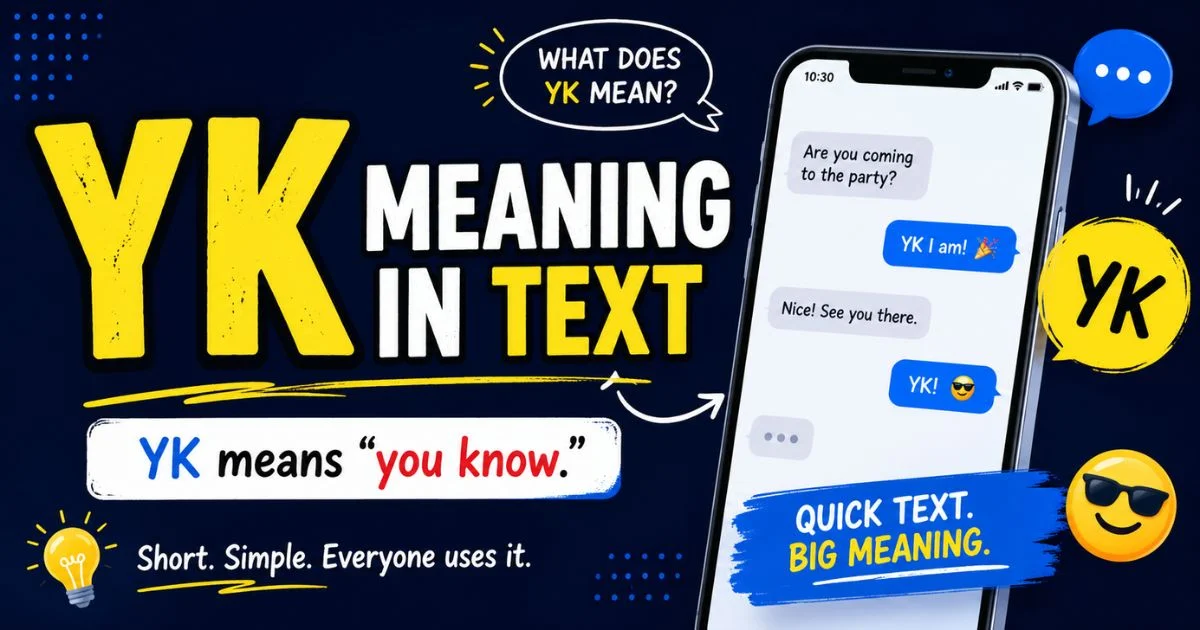
In most text messages, social media chats, and casual conversations, YK means “you know.” People use this texting slang to agree, explain a point, emphasize an idea, or make a message feel more relaxed and natural.
You’ll often see YK in texts, social media comments, group chats, and online conversations. The exact meaning can depend on the conversation context and tone.
In this guide, you’ll learn the YK meaning in text, how people use this abbreviation, its common uses across different platforms, examples, and natural ways to respond.
Read Also : What Does IDGAF Mean in Text? Full Slang Meaning
YK Meaning in Text + Definition
YK usually means “you know” in text messages and online conversations. People use it as a short, informal way to refer to something they think the other person already understands.
The meaning can shift slightly with context. For example, “YK what I mean” means “you know what I mean,” while “It was hard, YK?” uses YK to invite agreement or understanding. The tone usually feels relaxed and conversational.
Quick Definition Table
| Term | Meaning | Common Use | Tone |
| YK | You know | Texts, chats, social media | Casual |
| YK what I mean? | You know what I mean? | Checking understanding | Friendly |
| YK, it happens | You know, it happens | Adding a conversational thought | Relaxed |
| YK that place? | You know that place? | Referring to shared knowledge | Informal |
What Does YK Mean in a Text Message?
In a text message, YK most commonly stands for “you know.” People shorten the phrase because texting favors quick, easy communication. It can appear at the beginning, middle, or end of a sentence.
The abbreviation often adds a natural speaking style to a message. Someone might write, “YK I was right,” to mean “You know I was right,” or “It was awkward, YK?” to ask whether the other person understands the feeling.
YK does not usually carry a rude or negative meaning by itself. The surrounding words, punctuation, and relationship between the people determine the tone.
Example
Alex: “That movie was way better than I expected.”
Sam: “YK! I thought the same thing.”
Here, YK means “you know” and shows agreement.
Another example is:
“I just need some time, YK?”
In this case, YK makes the message sound softer and asks the reader to understand the speaker’s feelings.
The Origin of YK
YK developed as a shortened form of “you know,” following the wider growth of internet slang and text-message abbreviations. As people began using mobile phones, instant messaging, and online chat more often, short forms became a convenient way to communicate.
Unlike some slang terms with a clearly documented creator or launch date, YK does not have one widely accepted origin point. It belongs to a broader pattern of shortening familiar phrases, similar to abbreviations such as IDK for “I don’t know” and IK for “I know.”
Its meaning remains closely connected to ordinary spoken English. People often say “you know” when they want agreement, emphasize a shared idea, or make a conversation feel more natural. Text users simply shorten that familiar phrase to YK.
How YK Is Used Today
Today, YK appears mainly in informal digital communication. Its exact purpose depends on the sentence, but it usually keeps the relaxed feel of spoken conversation.
You may see YK in personal messages, comments, group conversations, gaming chats, and other online spaces. It works best when the people involved already understand casual internet language.
1. Text Messaging
In private texts, people use YK to keep messages short and conversational. It can show that the sender expects the other person to understand a situation or feeling.
For example:
“YK how nervous I was before the test.”
The sender assumes the other person already knows about the situation.
YK can also appear at the end of a message:
“I just wasn’t ready for that, YK?”
Here, the abbreviation invites the other person to relate to or understand the speaker.
2. Social Media
On social media, YK can appear in comments, captions, replies, and direct messages. Users often choose it because it fits the fast, informal style of online communication.
For example:
“YK that feeling when you finally finish your exams.”
The writer uses YK to connect with people who share the same experience.
Because social media posts reach different audiences, context matters. Some readers may understand YK immediately, while others may need the full phrase.
3. Group Chats
Group chats often contain short forms because several people communicate quickly at once. YK can help someone refer to information that everyone in the group already knows.
For example:
“YK what happened yesterday? 😂”
The sender assumes the group remembers the earlier event.
In a group with mixed ages or unfamiliar users, spelling out “you know” may make the message clearer.
4. Online Gaming
Gamers may use YK during casual chats, especially when they want to communicate quickly without interrupting gameplay.
For example:
“YK that player from last round?”
The sender uses YK to refer to a shared gaming experience.
However, gaming communities use many different abbreviations, so YK can depend on the conversation. If the sentence does not clearly support “you know,” check the surrounding messages before deciding what it means.
Examples of YK in Text Conversations
The easiest way to understand YK is to see how it works in natural conversations. In most examples, it replaces “you know” without changing the main idea of the sentence.
Friendly Examples
Mia: “I finally passed my driving test!”
Lena: “YK you were going to pass! Congrats!”
Here, YK helps Lena sound supportive and familiar.
Another example:
“YK you can always talk to me, right?”
The sender uses YK to make the message feel warm and personal.
Casual Examples
“YK that café near school?”
This means, “You know that café near school?” The sender assumes the other person knows the place.
Another casual example is:
“I was tired, YK, so I went home early.”
Here, YK adds a conversational pause, much like “you know” in everyday speech.
Conversational Examples
“It just felt strange, YK?”
The sender wants the other person to understand or agree with the feeling.
“YK what I mean?”
This is a common conversational use. It asks whether the reader understands the speaker’s point.
“We should probably leave early, YK, before traffic gets bad.”
In this sentence, YK makes the suggestion sound less formal and more like natural conversation.
Read More: LBVS Meaning in Text (Definition, Examples & Text Usage)
Tone of YK in Texting
The tone of YK usually feels casual and conversational. The abbreviation itself does not carry a fixed emotion, so the meaning depends on the words around it, punctuation, and the relationship between the people texting.
Friendly Tone
People often use YK in a friendly message when they want to sound familiar or supportive. It can suggest that the sender and reader share an understanding.
For example: “YK I’m always here for you.” This sounds warm because the phrase connects naturally with a personal message.
Neutral Tone
YK can also have a neutral tone when someone simply refers to information that the other person likely knows.
For example: “YK where the meeting is, right?” The sender is checking shared information without showing a strong emotion.
Informal Tone
YK is mainly an informal abbreviation, so it fits texting, social media, gaming chats, and casual online conversations better than formal writing.
For example, “It was a long day, YK?” sounds like normal speech. In a formal email, writing “you know” would usually look more appropriate.
YK Examples by Context
The same abbreviation can sound slightly different depending on who receives the message. Looking at the context helps you understand whether YK sounds friendly, neutral, personal, or simply casual.
Texting a Friend
Friends commonly use YK when they already share the same experiences or inside knowledge.
“YK that restaurant we tried last week? I want to go again.”
Here, YK refers to something both friends remember.
Family Conversation
Family members may use YK to refer to familiar people, places, or situations.
“YK how Mom always worries before a trip?”
The abbreviation makes the message sound relaxed and natural.
Dating Conversation
In dating conversations, YK can make a message feel more personal and less formal. The surrounding words matter more than the abbreviation itself.
“I really like talking to you, YK?”
Here, YK can make the message sound conversational and slightly vulnerable.
Workplace Chat
YK can appear in an informal workplace chat, especially between coworkers who regularly communicate casually.
“YK the client wants the report before Friday.”
However, it usually does not fit formal emails, official reports, or messages to unfamiliar professional contacts. In those situations, writing “you know” or stating the idea directly creates a clearer and more professional tone.
Group Chat
Group chats often use YK when several people share the same background or previous conversation.
“YK what happened in yesterday’s game? That was mistaken.”
The sender assumes everyone in the group understands the reference.
Why People Use YK
People use YK mainly because it makes casual communication shorter and more conversational. It works especially well when the reader already understands the subject.
Saves Time
Typing YK takes less time and space than writing “you know.” This small shortcut works well when people exchange quick messages.
Sounds Natural
People often say “you know” in everyday speech. Using YK can recreate that relaxed speaking style in written conversation.
For example, “It was awkward, YK?” feels closer to spoken language than a more formal sentence.
Common in Casual Chats
YK fits naturally into text messages, social media, direct messages, gaming chats, and group conversations. People who regularly use internet slang may recognize it immediately.
Still, not every reader knows every abbreviation. If clarity matters, spelling out “you know” remains the safer choice.
Fits Fast Communication
Modern chats often move quickly, so short forms help people respond without typing every word. YK works as a compact way to add shared understanding, agreement, or a conversational pause.
Its main strength comes from context. When you see YK in a message, read the full sentence first rather than assuming the abbreviation has a different meaning.
Read More: TTY Meaning in Text (Definition, Uses, and Text Examples)
YK vs Similar Texting Abbreviations
YK, IDK, and FYI all appear in digital communication, but they serve different purposes. Knowing the difference helps you understand a message without relying only on the abbreviation.
YK vs IDK
YK usually means “you know,” while IDK means “I don’t know.” The two abbreviations express very different ideas.
For example, “YK what I mean?” asks the other person to understand something. “IDK what happened” tells the reader that the sender does not have the answer.
| Abbreviation | Meaning | Typical Purpose |
| YK | You know | Refers to shared knowledge or understanding |
| IDK | I don’t know | Shows uncertainty or lack of knowledge |
YK vs FYI
FYI means “for your information.” People use it to share information that they think someone should know. YK, by contrast, usually refers to something the sender assumes the reader already knows or understands.
For example:
- YK: “YK the store closes at 8, right?”
- FYI: “FYI, the store closes at 8.”
YK invites recognition or agreement, while FYI simply provides information.
Alternative Ways to Say YK
You do not always need to use the abbreviation YK. The best alternative depends on the tone and the person receiving your message.
Casual Alternatives
In relaxed conversations, you can simply write:
- You know
- You know what I mean
- Right?
- If you know what I mean
- You get me
For example, instead of “It was weird, YK?”, you could write “It was weird, you know?” or “It was weird, right?”
These options work well with friends, family members, and people you regularly chat with.
Professional Alternatives
Professional communication usually benefits from clearer wording. Instead of YK, you can state the exact idea you want to communicate.
Useful alternatives include:
- As you know
- As discussed
- As mentioned earlier
- You may recall
- To clarify
For example, replace “YK the deadline is Friday” with “As discussed, the deadline is Friday.” The second version sounds more appropriate for a workplace message or formal email.
When Should You Use YK?
Use YK when the conversation feels informal and the other person understands common texting abbreviations. It works best when you want your message to sound relaxed rather than formal.
Good Situations
YK can work well in:
- Text messages with close friends
- Casual family chats
- Social media comments and direct messages
- Informal group chats
- Online gaming conversations
- Relaxed conversations with people who regularly use slang
For example, “YK I was joking 😂” works naturally in a friendly chat.
Situations to Avoid
Avoid YK when the message needs a professional, formal, or highly clear tone. This includes formal emails, business proposals, academic assignments, official documents, and communication with someone who may not know the abbreviation.
Instead of “YK the meeting starts at 10”, write “As you know, the meeting starts at 10” or simply “The meeting starts at 10.”
Choosing the full phrase can prevent confusion and make your message look more polished.
Read More: WYGG Meaning in Text (Definition, Uses & Examples)
Alternate Meanings of YK
Although “you know” represents the common meaning of YK in texting, abbreviations can have different meanings in other fields or communities. Context determines the correct interpretation.
For example, YK may appear as part of a name, location, organization, technical term, or other specialized abbreviation outside casual messaging. These uses do not necessarily relate to internet slang.
When you see YK in a text message, look at the words around it first. If replacing YK with “you know” makes the sentence sound natural, that is usually the intended meaning. If it does not fit, check the broader conversation before assuming what the sender meant.
Common Mistakes When Using YK
Most mistakes with YK happen because people treat the abbreviation as universally understood. A little attention to context can make your messages much clearer.
Assuming Everyone Knows It
Not everyone recognizes YK immediately. Someone who rarely uses texting slang may wonder what the abbreviation means.
If you are speaking with someone unfamiliar with internet abbreviations, writing “you know” avoids unnecessary confusion.
Using It in Formal Writing
YK belongs mainly to informal digital communication. Using it in a formal email, school assignment, business report, or official document can make the writing look too casual.
For professional communication, use complete phrases and state your meaning directly.
Confusing It With Other Acronyms
Texting contains many similar-looking abbreviations, and it can be easy to mix them up. YK means “you know,” while IDK means “I don’t know” and FYI means “for your information.”
Always read the complete sentence before interpreting an acronym. Context usually makes the intended meaning clear.
Is YK Appropriate for Different Audiences?
YK is most appropriate in informal conversations, but the right choice depends on who receives the message. Consider your relationship with the person and the setting before using the abbreviation.
With Close Friends
YK works naturally with close friends because they usually understand common texting slang. It can make a message feel relaxed and familiar.
“YK I was waiting for you 😂” sounds natural in a casual chat between friends.
With Family Members
You can use YK with family members if your usual conversations already include abbreviations and slang. A family group chat, for example, may have a very informal style.
“YK Dad loves that place.” fits a relaxed family conversation.
With New People
Use YK carefully with someone you have just met. They may understand the abbreviation, but they may also find it unclear or overly casual.
Writing “You know” instead of YK can make the first few conversations easier to understand while you learn the person’s communication style.
With Teachers or Professors
YK usually does not fit communication with teachers or professors, especially in formal emails, assignments, or academic discussions. Use complete phrases and professional wording instead.
For example, write “As you know, the deadline is Friday” rather than “YK the deadline is Friday.”
YK in Different Types of Conversations
The meaning of YK can stay the same while its purpose changes slightly. It may help ask for agreement, support a statement, or make a message sound closer to natural speech.
Asking a Question
YK can appear in a question when the sender wants to check whether the reader understands or remembers something.
“YK where the new café is?”
This means “You know where the new café is?”
Making a Statement
A speaker may add YK to a statement when they assume the other person understands the situation.
“YK I don’t like crowded places.”
The sender expects the reader to recognize this preference.
Showing Agreement
YK can also appear when someone agrees with another person’s point.
“YK! That’s exactly what I was thinking.”
Here, the abbreviation helps express recognition and agreement.
Adding Emphasis
Sometimes YK adds a conversational pause or draws attention to a feeling.
“That was really stressful, YK?”
The phrase does not add a new fact. Instead, it encourages the other person to understand the speaker’s experience.
How to Reply When Someone Says YK
There is no single correct response to YK. Your reply should match the message and the tone of the conversation.
Short Replies
If the sender uses YK to seek agreement, a simple response may work:
- Yeah.
- Exactly.
- I know.
- Right.
- True.
For example:
Friend: “YK how expensive everything is now?”
You: “Yeah, seriously.”
Friendly Replies
When the conversation feels warm or playful, you can respond with a little more personality.
Friend: “YK I always support you.”
You: “I know, and I really appreciate it!”
This keeps the conversation friendly without overthinking the abbreviation.
Natural Conversation Replies
Sometimes YK appears as part of a longer thought, so you can simply answer the main idea rather than replying to YK itself.
Friend: “I was nervous before the interview, YK?”
You: “I get that. Interviews can be stressful.”
The key is to focus on what the sender means. YK often works like a conversational filler or a request for understanding, so your response can address the feeling, question, or idea that comes with it.
YK in Online Slang and Internet Culture
YK is part of the wider style of internet slang that makes digital conversations faster and more casual. Like many texting abbreviations, it reflects the way people shorten familiar phrases when they communicate through phones, social platforms, and online chats.
Common Internet Abbreviations
YK appears alongside many other short forms used in everyday digital communication. Common examples include LOL for “laugh out loud,” IDK for “I don’t know,” BTW for “by the way,” and FYI for “for your information.”
These abbreviations help people communicate familiar ideas quickly. Their popularity also depends on age, platform, community, and personal texting habits.
Informal Digital Language
Online conversations often resemble spoken language more than formal writing. People use short forms, emojis, slang, punctuation, and conversational phrases to make messages feel quick and personal.
YK fits this style because “you know” already appears naturally in everyday speech. Shortening it to YK lets the sender keep that conversational feel without typing the full phrase.
Changing Texting Habits
Texting language continues to change as communication platforms and user habits change. Some abbreviations become widely recognized, while others become less common over time.
YK remains useful when both people understand casual texting language. However, users often switch between abbreviations and full phrases depending on the audience and situation.
How to Understand YK From Context
The safest way to understand YK is to read the surrounding message instead of treating the abbreviation as a fixed answer in every situation. In most casual texts, YK means “you know,” but context confirms whether that interpretation makes sense.
Check the Full Sentence
First, read the entire sentence and mentally replace YK with “you know.” If the sentence sounds natural, you have likely found the intended meaning.
For example:
“YK what I mean?”
Replacing YK with “you know” gives “You know what I mean?”, which clearly fits.
Consider the Conversation
Look at what the people discussed before the message. If the sender refers to a shared experience, YK may point to something both people already understand.
For example:
“YK that guy from yesterday?”
The earlier conversation can reveal exactly who or what the sender means.
Look at the Person’s Tone
The sender’s usual communication style can also provide a clue. A friend who regularly uses texting slang, emojis, and shortened words probably uses YK in its casual “you know” sense.
Punctuation can add another clue. “YK?” may invite agreement or understanding, while “YK I was right” simply refers to something the sender assumes you already know.
When the meaning still seems unclear, asking the sender what they mean is better than guessing. Context usually solves the confusion quickly.
Frequently Asked Questions About YK Meaning in Text
1. What does YK mean in texting?
YK usually means “you know” in texting. People use it as a casual abbreviation when they assume the other person understands the situation or shares the same context.
2. Is YK a slang abbreviation?
Yes. YK is an informal texting abbreviation commonly used in casual digital conversations. It can appear in text messages, social media posts, group chats, and other relaxed online communication.
3. Is YK the same as “you know”?
Yes, in most casual texting situations. YK is simply a shortened form of “you know.” For example, “YK what I mean?” means “You know what I mean?”
4. Can YK have different meanings?
Yes. Abbreviations can have different meanings in different communities or fields. However, when YK appears in a normal text conversation, “you know” is the most common interpretation.
5. Is YK appropriate in professional messages?
Usually, no. YK has a casual tone, so it works better in informal chats than in formal workplace communication. In professional messages, write the complete phrase or state the idea directly.
6. How should I reply to YK?
Reply based on the meaning of the whole message. Short responses such as “Yeah,” “Exactly,” “Right,” or “I know” can work when the sender seeks agreement. If YK appears within a longer statement, respond to the main point instead.
7. Is YK commonly used on social media?
Yes. YK can appear on social media, especially in casual comments, direct messages, captions, and group conversations. Its use varies by platform, age group, and personal texting style.
8. What is the difference between YK and IDK?
YK means “you know,” while IDK means “I don’t know.” YK usually refers to shared understanding, while IDK expresses uncertainty or a lack of knowledge.
9. Can I use YK in a formal email?
It is better to avoid it. Formal emails should use clear, complete wording. Instead of “YK the deadline is Friday,” write “As discussed, the deadline is Friday” or simply “The deadline is Friday.”
10. Why do people use YK instead of “you know”?
People use YK because it is short, quick, and casual. It also matches the fast style of texting and can make written messages feel more like natural speech. However, spelling out “you know” works better when clarity or formality matters.
Conclusion
YK Meaning in Text is most commonly “you know.” People use this short abbreviation in casual texts, social media, group chats, gaming conversations, and other informal settings. Its exact tone can change with the sentence, but it often refers to shared understanding, agreement, or a conversational pause.
The key is to consider the context, relationship, and tone before interpreting or using YK. It works naturally with friends and family but may feel too casual for teachers, professors, formal emails, or professional communication. When the audience may not recognize the abbreviation, writing “you know” gives you a clearer option.
Once you understand these differences, YK becomes easy to recognize and use in the right conversation.

Hi, I am James Whitman, the author of Skypunz.com. I create funny puns and jokes to make your day brighter and bring a smile to every reader.